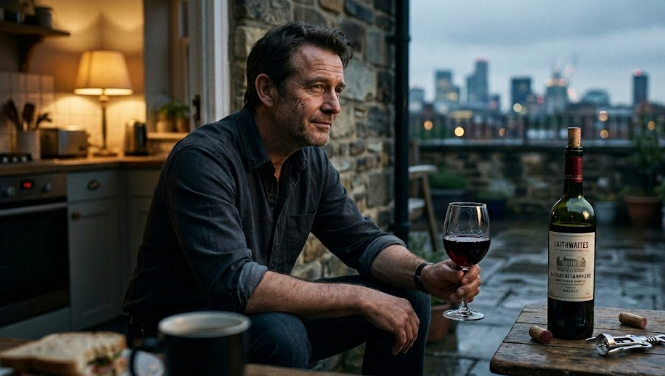
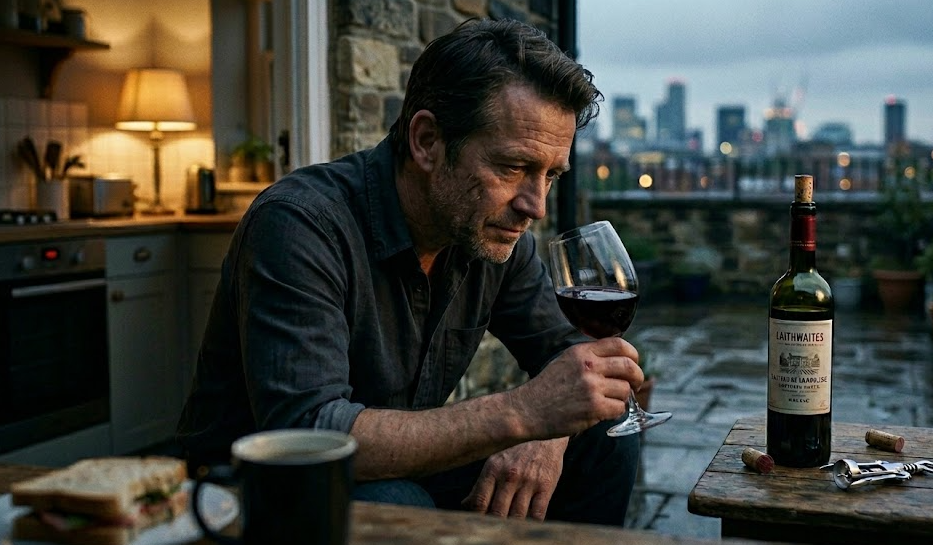
The clock on the microwave said 2:14 AM. It wasn’t a blue glow; it was that aggressive, hospital-white LED that cuts straight through your retinas when you’re already half-blind from staring at a spreadsheet for fourteen hours. My lower back was a knot of dull, throbbing anger. On the kitchen island sat a half-eaten sandwich, the crusts curling upward like dead leaves, and a mug of coffee that had gone cold around noon.
I remember looking at my hands. They were shaking slightly, just a microscopic tremor from too much caffeine and the ambient anxiety of a deadline that didn’t actually matter to anyone but a vice president who wouldn’t remember my name by next quarter. I had achieved the goal. The launch was live. The metrics were green.
But I felt entirely hollowed out. Empty in a way that sleep couldn’t fix.
That is the modern trap, isn’t it? We grind ourselves down into a fine dust, chasing an abstract version of success that someone else drew up on a whiteboard. We endure the fluorescent hum of the office, or worse, the silent isolation of the spare bedroom turned workspace, trading our finite, breathing hours for digital validation.
I walked over to the window. Outside, the rain was slicking the pavement, reflecting the orange smudge of the streetlights. I realised then that I had spent the last three years of my life optimizing for efficiency. I had streamlined my morning. I had automated my finances. I had outsourced my grocery shopping.
I had made my life perfectly convenient. And in doing so, I had stripped away every single ounce of friction that makes being a human being worthwhile.
The Tyranny of the Smooth Surface
We are being sold a lie about ease. The entire modern economy is set up to remove friction from your existence. One-click ordering. Algorithmic playlists that know what you want to hear before you do. Pre-chopped vegetables wrapped in three layers of plastic.
Everywhere you look, the sharp edges of reality are being sanded down. They call it progress. They call it user experience.
But when you remove all the friction, you also remove the texture. You end up living your life on a smooth, Teflon surface, sliding from one automated task to the next without ever catching on anything. You don’t feel the weight of what you’re consuming. You don’t have to wait for anything, which means you never learn how anticipation works. You become a passive recipient of your own life.
Quality isn’t convenient. Quality is heavy, it’s stubborn, and it demands something from you.
Think about the corporate culture we occupy. It’s built on the cult of the dynamic, agile pivot. We are told to be liquid, to flow into whatever shape the market requires. But if you’re always flowing, you never solidify into anything with substance. You become a commodity.
I spent years believing that if I just worked faster, if I bought the right productivity apps, if I woke up at 5:00 AM to run until my lungs burned, I would eventually earn the right to slow down. I was treating my life like a debt that needed to be paid off before I could start living it.
It’s a sucker’s game. The work doesn’t stop because you finish it; it stops because you decide to step away from the desk.
We need a line of defense. We need something that cannot be optimized by a software engineer in Silicon Valley. For me, that line of defense became craftsmanship. It became the deliberate choice to seek out things that take time to make, things that carry the dirt and the weather of the place they came from.
A Shift in the Soil
The turning point was small, as these things usually are. It wasn’t a grand epiphany on a mountaintop. It was a Saturday afternoon in late October, the sky the colour of an old zinc bucket. I had driven out of the city without a plan, just wanting to get away from the Wi-Fi signal.
I ended up in a small independent bottle shop in a town that smelled of woodsmoke and wet wool. The floorboards creaked. The bloke behind the counter had dirt under his fingernails and didn’t look up from his book when I walked in. He wasn’t trying to upsell me. He didn’t have a dashboard tracking my customer lifetime value.
I picked up a bottle of red. The label wasn’t flashy; it looked like it had been printed on a press that had seen two world wars. It was from a small vineyard in the southern Rhône, a place where the vines have to fight through limestone boulders to find water.
“That one’s got some grit in it,” the shopkeeper said, not looking up. “The bloke who makes it doesn’t use tractors. Still uses a horse. Says the engines compact the soil too much. Suffocates the roots.”
I bought it. Not because I knew anything about the southern Rhône, but because I liked the idea of a man refusing a tractor because he cared about the breathability of dirt.
That night, I didn’t open my laptop. I didn’t stream a documentary in the background while scrolling through a feed on my phone. I hunted around in the drawer for an old corkscrew—the manual kind, where you actually have to use your wrists, not the levered gadgets that pop a cork with zero effort.
The Weight of the Bottle
There is a specific resistance when a real cork meets metal. You can feel the density of the wood, the way it has held its ground inside the glass neck for five, maybe ten years. It requires a bit of leverage, a slight tug, and then that distinct, wet thump that signifies the seal has been broken.
That sound is the precise opposite of a notification chime. A notification demands your attention for something fleeting; the sound of a cork opening announces that time is about to slow down.
I poured it into a glass that had some weight to it. The colour wasn’t that translucent, commercial purple you get from supermarket shelves—the stuff that’s been chemically adjusted to look uniform in every light. This was dark, dense, almost brooding, with a rim that showed hints of brick red.
The first smell wasn’t sweet. It was leather, old stones, and dried thyme that had been baking under a Mediterranean sun. It smelled like a place. It didn’t smell like a factory.
When I took a sip, it didn’t code-switch to please my palate. It was astringent at first, a bit muscular, demanding that I pay attention to it. It wasn’t a drink designed to be chugged while multitasking. It forced me to sit back in the chair. It forced me to chew on it, metaphorically speaking.
In that moment, sitting in a dark kitchen with the rain hitting the glass, I realized what I had been missing. It wasn’t luxury. I didn’t want gold-leafed nonsense or status symbols to show off on an image board. I wanted reality. I wanted something that had been handled by human hands, shaped by a specific season, and left alone to mature without a project manager checking the KPIs.
That was my introduction to the world of real wine—not the stuff that gets mass-produced in giant industrial vats where they add oak chips and sugar to standardise the flavour for global distribution, but the stuff that actually tells a story about where it came from.
Searching for the Real Stuff
The problem with discovering the good stuff is that it’s bloody hard to find consistently if you live in a city and spend most of your life behind a screen. You don’t always have the time to drive out to rural bottle shops or spend hours researching obscure cooperatives in the Rioja hills.
You try the high street shops, but the shelves are dominated by three major conglomerates that buy up juice in bulk, blend it until it tastes like liquid blackcurrant jam, and slap a fancy, gold-embossed label on it to make you feel like you’re buying heritage. It’s an illusion. It’s the beverage equivalent of corporate jargon—smooth, empty, and designed to offend no one while satisfying nothing.
I wanted a pipeline to the people who still used horses in the vineyard. I wanted the bottles that didn’t make it to the major supermarket chains because the production run was too small to fill a container ship.
That’s how I stumbled across Laithwaites.
They’ve been doing this since the late sixties, long before “artisanal” became a marketing buzzword used to sell cereal. The story goes that Tony Laithwaite went over to Bordeaux in an old van, fell in love with the real, rough-edged wines the locals were drinking, and started bringing cases back for his mates.
That resonated with me. It wasn’t about creating a lifestyle brand; it was about a bloke who found something authentic and wanted to share it before the industrial machine turned it into profit margins.
They don’t just buy from brokers. Their buyers are out there on the ground, walking the rows of vines in places like the Barossa or the foothills of the Pyrenees, talking to families who have owned the same plot of land since before the industrial revolution. They look for the outliers. The winemakers who are too stubborn to change their methods just because a consultant told them they could increase yield by ten percent if they used different yeasts.
Reclaiming the Evening
My routine changed after that. Not dramatically—I still have to answer the emails, I still have to deal with the spreadsheets, and the microwave clock still glares at me when I finish late.
But now, there is a hard boundary.
When the laptop lid snaps shut, the night begins. I don’t transition from the work screen to the entertainment screen immediately. I walk into the kitchen, I select a bottle, and I go through the ritual.
Last night it was a Malbec from a high-altitude vineyard in Mendoza. The bottle felt cold and heavy in my hand. When the cork came out, the scent filled the immediate radius of the counter—dark plum, tobacco leaf, and that iron-like minerality you only get when vines have to scream for survival through compacted rock.
I sat on the back step. The air was cool, the city hummed in the distance, and for forty-five minutes, I didn’t think about a single project deliverable. I just tasted the wine. I let the tannins dry out my mouth, followed by that long, warming finish that stays with you like a good conversation.
It’s about reclamation. You are taking back your time from the people who think they own it because they pay your salary. You are declaring that your senses belong to you, not to an algorithm trying to maximize your engagement metrics.
You don’t need a cellar full of investment-grade Bordeaux that you’re too afraid to open. You need honest wine. Wine that has some dirt under its fingernails, just like that shopkeeper.
If you’re still sitting under the fluorescent lights, or if you’re looking at your phone right now with that familiar tightness in your chest, do yourself a favour. Stop optimizing. Choose something that takes time. Choose something that has a pulse.